DC homes deal with moisture, wood rot, and structural movement in the crawl space, often driven by the ground the house sits on and how old the original construction is. Left unaddressed, that combination weakens floor joists, drives up energy bills, and creates the conditions for mold throughout the home. Crawl Space Brothers handles encapsulation, waterproofing, and structural repair for homes across the District, from Federal-era rowhouses to new construction in neighborhoods like Navy Yard. Every job starts with a free inspection.
The ground under part of downtown DC used to be river. The area around the National Mall was swampland until it got filled in with material dredged from the Potomac, and the Potomac Formation clay underneath the rest of the District never fully lets go of water once it’s absorbed it. A crawl space built on either kind of ground is starting from wet soil, not dry.
DC’s rowhouses made that worse by design, not by accident. Builders vented crawl spaces on purpose, on the assumption that outside air moving through would keep things dry. It does the opposite. Summer air in DC carries enough moisture on its own, average relative humidity sits around 70 percent, that venting a crawl space just invites that humid air in to condense on the first cool surface it hits, which is usually a floor joist that’s already sitting a few feet above wet clay.
Put those two things in the same crawl space for a hundred years and the wood underneath a DC rowhouse has been dealing with moisture from below and moisture from the air the entire time, long before anyone finds rot or a sagging floor.
Washington, DC Metro Area
A musty smell in a first-floor room, a floor that gives slightly underfoot, an energy bill that’s climbed without explanation. Each one usually traces back to the same crawl space below, even when the connection isn’t obvious from where you’re standing.
A stale, earthy smell that seems to come from below your floors, especially strong near vents or in a first-floor room, usually means moisture has been sitting in the crawl space long enough to start affecting the air throughout the house. Left alone, that moisture keeps feeding whatever mold or mildew is producing the smell, and the odor tends to spread to more rooms rather than staying contained.
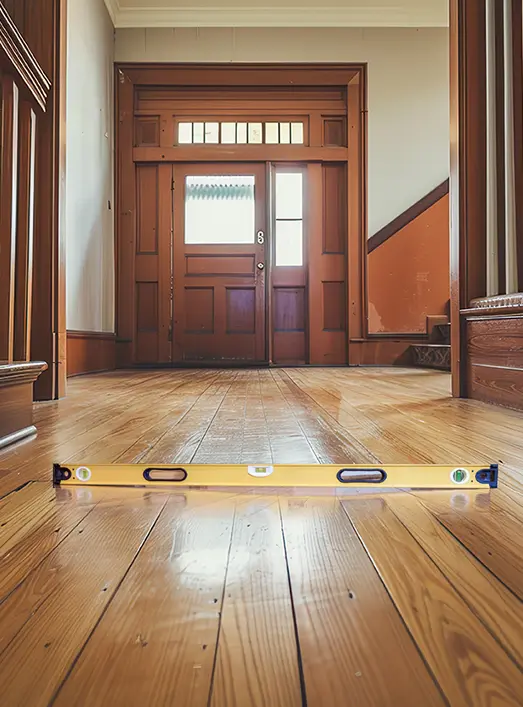
A floor that gives slightly underfoot, or a noticeable dip in one area, means the joists or support beams underneath have weakened, usually from prolonged moisture exposure or, in DC’s older homes, wood rot that’s been developing for years. Once a joist has softened, it keeps losing strength under the same daily weight, and what starts as a small bounce in one spot can turn into a floor that needs structural support to stay safe to walk on.
A door that no longer latches cleanly or a window that’s hard to open often traces back to framing that’s shifted as the structure below it settled or absorbed moisture. That shift usually continues in small increments, so a door that’s merely annoying today can become one that won’t close at all within a year or two.
Dark speckling or fuzzy growth on joists, insulation, or ductwork means conditions have stayed damp long enough for mold to establish itself, and it typically spreads to nearby wood and insulation from there. Mold left in place continues consuming the wood it’s growing on, weakening structural members over time, and it can affect indoor air quality throughout the house since crawl space air moves upward into living spaces.
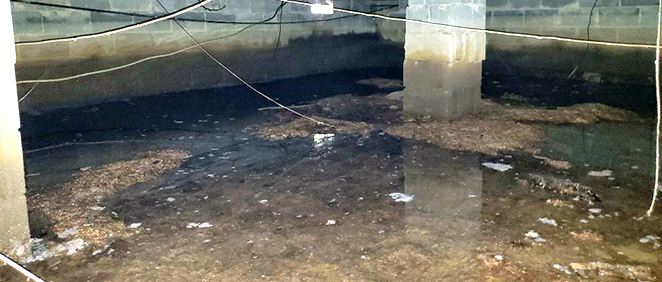
Water pooling under the house, or soil that stays wet well after the last rain, means moisture is collecting somewhere it shouldn’t be and has nowhere to drain on its own. That standing water saturates whatever wood or insulation it touches, and each additional rain event adds to it rather than letting the space dry out between storms.
Floors that feel cold in winter, or an energy bill that’s climbed without an obvious reason, often point to a crawl space no longer doing its job of separating the house from outside air and ground moisture. That inefficiency compounds every season it goes unaddressed, since a system working harder to heat or cool the home also shortens the lifespan of the HVAC equipment doing that work.
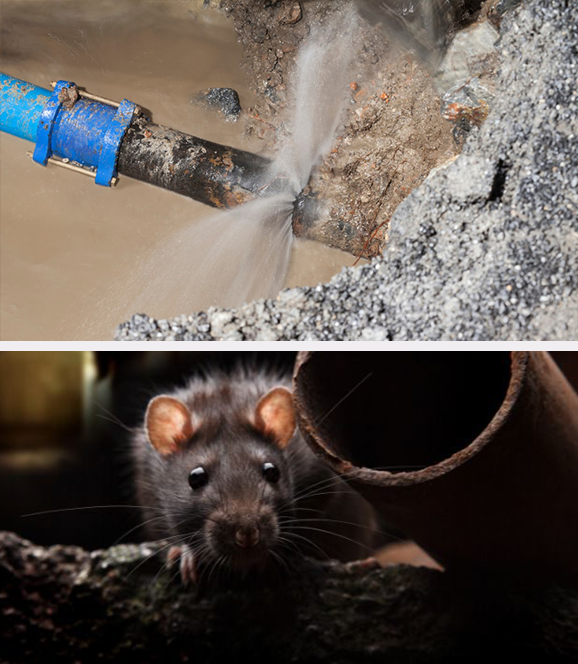
Rodents, termites, or carpenter ants taking up residence in a crawl space are drawn to the same moisture and softened wood that cause rot, and their presence is often a sign the underlying dampness has been there for a while. Left in place, pests add their own damage on top of the existing moisture problem, particularly termites and carpenter ants, which feed directly on the same weakened wood already affected by rot.
This expansion and contraction cycle puts constant pressure on your crawl space walls (called hydrostatic pressure) and can cause cracks that allow water to seep into your crawl space. It’s a problem that affects homes throughout the District, from the newest construction to historic properties that have weathered decades of soil movement.
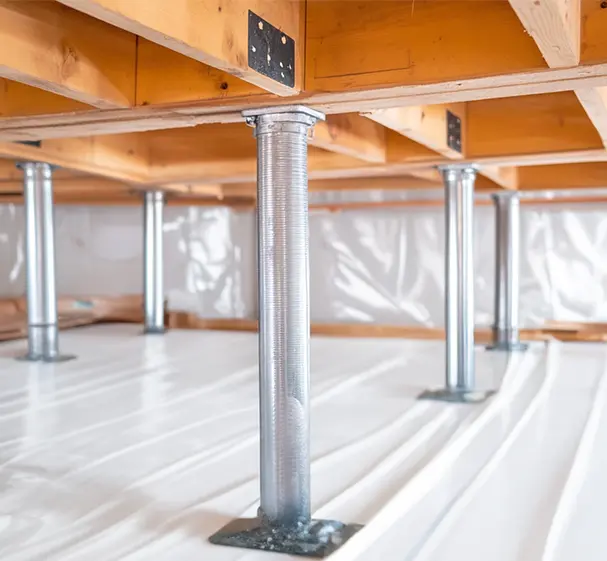
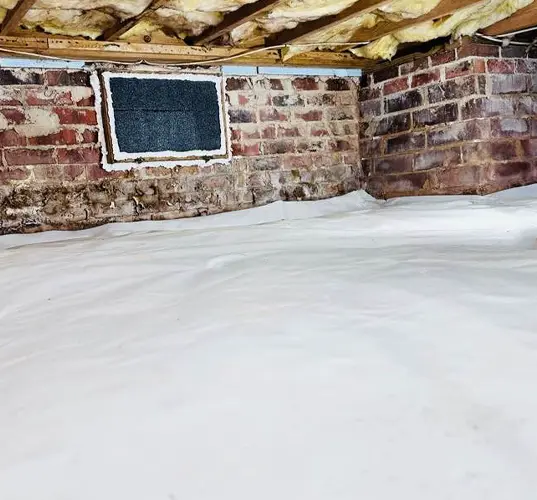
DC’s clay soil pushes moisture upward into an open crawl space year round, and a vapor barrier is what stops that moisture before it ever reaches the air. Crawl Space Brothers installs a heavy-duty liner across the entire crawl space floor and up the foundation walls, sealed at every seam so ground moisture has no path around it.
Learn more about vapor barriers
A vapor barrier alone doesn’t address humid air getting in through the vents, which is why full encapsulation seals the floor, walls, and vent openings together as one system. This is the standard fix for DC’s older rowhouses, where vents were installed on the assumption that outside airflow would keep the space dry, an assumption that works against the house rather than for it.
Learn more about encapsulation
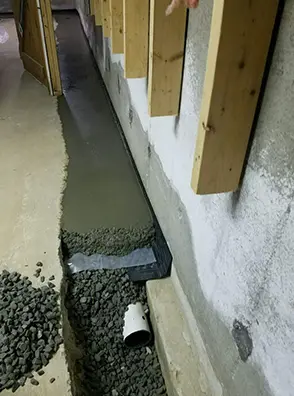
When water is actively reaching the crawl space rather than just seeping up through the soil, a drainage system channels it to a collection point instead of letting it pool against a foundation wall or floor joist. This matters most in crawl spaces built on DC’s lower-lying, clay-heavy ground, where water has nowhere else to go once it arrives.
Learn more about drainage systems
A French drain intercepts water outside the crawl space, in the ground itself, and redirects it before it ever reaches the foundation. Perforated pipe surrounded by gravel gives water a path of least resistance that leads away from the house instead of toward it.
Learn more about French drains
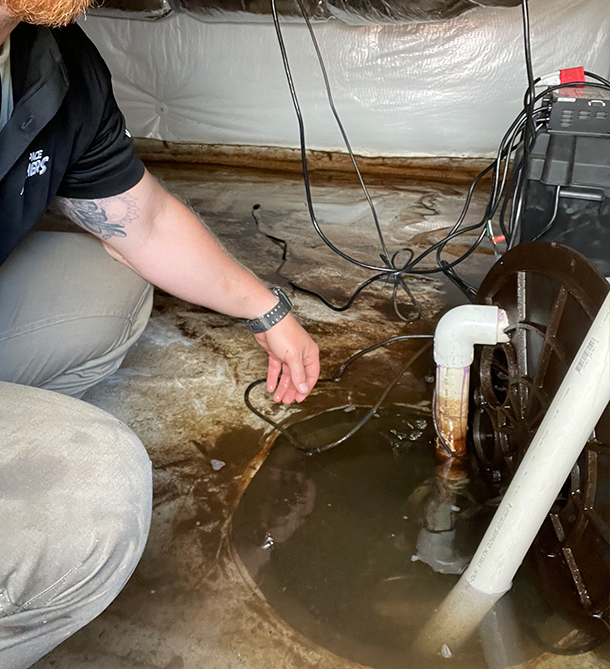
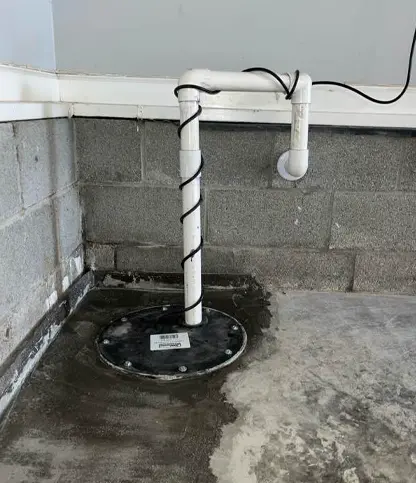
Whatever water still makes it into the crawl space needs a way out, and a sump pump with battery backup handles that even when the power goes out. That backup matters specifically in DC, where summer thunderstorms are often the same storms that knock out power in the first place.
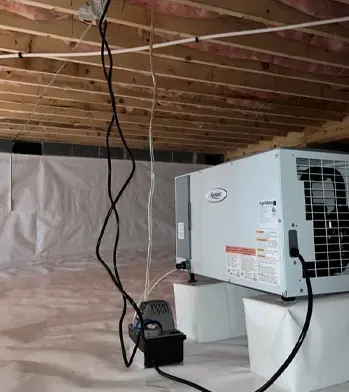
Once the ground is sealed and the vents are closed, a dehumidifier manages whatever moisture is left in the air, which is usually a fraction of what the space dealt with before the rest of the system was in place. This keeps humidity low enough that mold has nothing to grow on, even during DC’s most humid summer stretches.
Learn more about dehumidifiers
DC’s older rowhouses were built with vents on purpose, based on an airflow assumption that doesn’t hold up against the District’s humidity. Sealing those vents and insulating around them closes off that original design flaw, stopping humid outside air from getting in and condensing on the first cool surface it touches.
Wood rot develops in the dark, damp conditions common in unsealed DC crawl spaces, and it often goes unnoticed until a joist or beam has already lost significant strength. Wood rot repair removes the affected wood and replaces it, then addresses the moisture source that caused it so the same rot doesn’t start again in the new material.
Answer: Common signs include a musty smell in your home, bouncy or sagging floors, an energy bill that’s climbed without explanation, and visible mold or standing water if you check the crawl space itself. In DC specifically, sticking doors or windows can point to crawl space movement tied to the same clay soil and moisture issues affecting the foundation.
Answer: Cost depends on your home’s size, the extent of any existing damage, and which services you need. A single vapor barrier costs less than a full encapsulation with structural repairs included. Every free inspection comes with detailed, transparent pricing, and financing is available to make necessary repairs manageable.
Answer: Basic maintenance is something a homeowner can handle, but DC’s combination of clay soil, older construction, and humid climate creates moisture problems that are difficult to solve permanently without professional equipment. A DIY fix often provides only temporary relief and can trap moisture in a way that makes the underlying problem worse.
Answer: Most projects take one to three days depending on the size of the space and scope of work. A simple vapor barrier or drainage fix might be finished in a day, while full encapsulation with structural repairs typically runs two to three days.
Answer: Building America research shows sealed and insulated crawl spaces can reduce heating and cooling costs by up to 20 percent, and the Department of Energy’s broader estimate for home air sealing puts average savings closer to 15 percent. The exact number depends on your home’s size, HVAC system, and how much air was leaking through the crawl space before encapsulation.
Crawl Space Brothers offers a Lifetime Transferable Warranty, meaning the work is guaranteed for as long as you own the home, not just for a set number of years. Every job starts with a free, no-obligation inspection, and pricing is provided in writing before any work begins.
Financing is available for homeowners who need it, with interest-free terms on qualifying projects. Technicians are trained and certified specifically in crawl space work, not general contracting, which matters in a city where clay soil and century-old construction create problems that a generalist repair often misses.
Moisture and wood rot get more expensive to fix the longer they sit in DC’s clay soil and humid climate, especially in a home old enough to have gone without a vapor barrier for decades. Crawl Space Brothers will inspect your crawl space, explain exactly what’s happening, and provide written pricing before any work begins. Call now or schedule online to get started.
Call us today for service to your home in Washington, DC and the surrounding towns.
© 2025 CRAWL SPACE BROTHERS INC. All rights reserved.
*Terms and Conditions: Customer can only claim one offer per estimate. Financing options only available with approved credit. Offer may not be combined with any other offer. Ask foundation specialist for further details. Estimates dated April 4, 2026 through May 3, 2026 are not eligible. Promo valid through May 31, 2026. Installation appointments must be prior to June 20, 2026. Up to $1,500 offer equivalent to five-percent off any job over $10,000. Coupon must be presented at time of evaluation. Free dehumidifier offer also requires purchase and install of Crawl Space Encapsulation work of at least 1,000 square feet.