


1515 Mockingbird Ln UNIT 410, Charlotte, NC 28209
(704) 769-5297
Call Us Today!
1515 Mockingbird Ln UNIT 410, Charlotte, NC 28209
Call Us Today!
Charlotte's rapid growth has paved over much of the ground that used to absorb rainfall, and that runoff now moves faster into the creeks that cut through the city, Little Sugar Creek, Briar Creek, McAlpine Creek. For homes near those corridors, that water can end up underneath the house, where it turns a crawl space into a source of musty air, mold, wood rot, and structural damage that gets worse with every season it sits.
Fixing it depends on what's going on down there. Standing water, a dirt floor with no vapor barrier, rotted joists, and a sagging subfloor all point to different solutions, and most crawl spaces in trouble have more than one of those happening at the same time. The right repair addresses what's actually failing rather than covering symptoms with a single product.
Crawl Space Brothers provides crawl space repairs, encapsulations, vapor barrier installations, dehumidifier systems, and structural repairs for Charlotte homeowners. We have a local office and crews serving the Charlotte metro, and we offer free inspections so you know what you're dealing with before any money changes hands.
Charlotte averages around 43 inches of rain a year according to NOAA’s 30-year climate normals, and the Piedmont’s Cecil clay drains it slowly. That water sits near the surface longer than it would in sandier soil, and for a home with a vented crawl space, the ground underneath stays damp well after the rain stops. The vents that were supposed to dry the space out actually pull Charlotte’s humid air in for most of the year, which adds moisture instead of removing it.
The city’s growth has made that worse. Decades of development replaced open ground with roads, rooftops, and parking lots, and that runoff has to go somewhere. Homes that sit downhill or near one of Charlotte’s creek corridors absorb more of that redirected water than homes on higher, better-graded lots. The city and county run a joint stormwater utility specifically because that runoff has become a documented flooding concern across the metro.
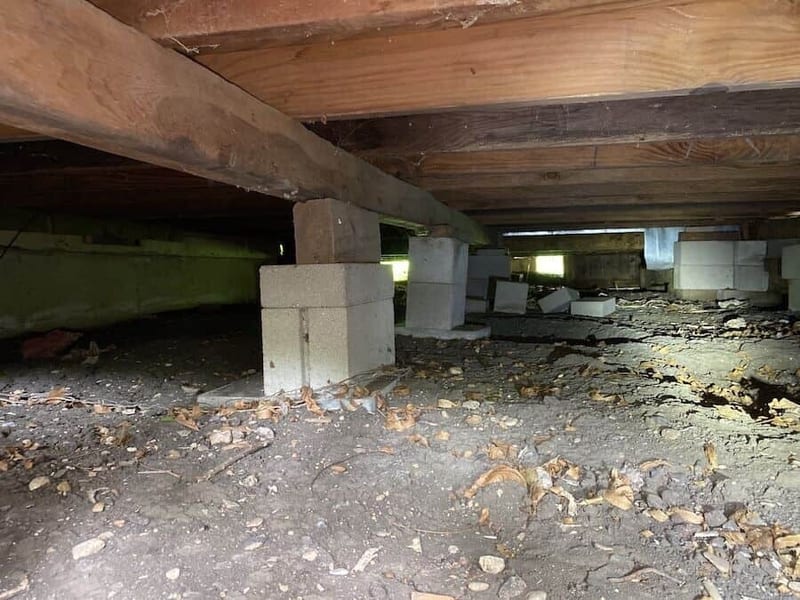
Older Charlotte homes with original crawl space construction are especially exposed. Many were built with dirt floors, no vapor barriers, and open foundation vents, a combination that works against the crawl space in this climate rather than protecting it. Even homes built in the last 20 years can develop problems if the grading around the foundation has settled or shifted since construction.
A persistent musty smell in your home that doesn’t respond to cleaning or air fresheners is one of the earliest indicators of crawl space moisture. That smell is mold and mildew growing on organic materials underneath the house, and the air carrying it rises through the floor assembly and into your living space. In Charlotte’s humid climate, a vented crawl space with a dirt floor can develop this problem within a single wet season.
Floor joists and girders that have been sitting in a damp crawl space long enough will soften as the wood absorbs moisture and begins to rot. The floor above starts to feel spongy or uneven underfoot, and in more advanced cases it will visibly sag toward the center of a room. That soft feel underfoot is structural, and it gets worse the longer the wood stays wet.
Fiberglass insulation between floor joists absorbs moisture and holds it against the wood, which makes it one of the first places mold appears in a crawl space. If the insulation is sagging, discolored, or falling out of the joist bays, the moisture problem has been going on long enough to compromise what’s behind it. Mold on the joists themselves means the wood is already being broken down.
A crawl space floor that stays visibly wet or holds puddles after rain points to either a drainage failure around the foundation or a high water table pushing moisture up from below. In Charlotte, homes near Little Sugar Creek, Briar Creek, or McAlpine Creek are more likely to deal with this because of their proximity to the floodplain. Standing water accelerates every other problem on this list.
A crawl space full of humid air forces your HVAC system to work harder to condition the air above it. If your energy bills have climbed without a change in usage, and your HVAC equipment has been serviced recently, the crawl space is worth checking. Sealing and dehumidifying the space can reduce the load your system carries through Charlotte’s long, humid summers.
A crawl space encapsulation covers the floor and walls of the space with a sealed vapor barrier, cutting off ground moisture at the source and closing the space to outside air. In Charlotte, that means shutting down the two biggest moisture pathways at once, the humid air coming in through foundation vents and the water vapor rising off a bare dirt floor. Once the space is sealed, a commercial-grade dehumidifier keeps the humidity low enough to prevent mold from returning.
Crawl Space Brothers uses a 20-mil reinforced vapor barrier rated for ground contact, sealed at every seam and fastened to the foundation walls. If your crawl space also has standing water or active drainage problems, we address those before sealing anything, since wrapping a vapor barrier over a water problem traps the moisture inside rather than keeping it out. Vent sealing is included as part of the encapsulation so the space stays controlled year-round.
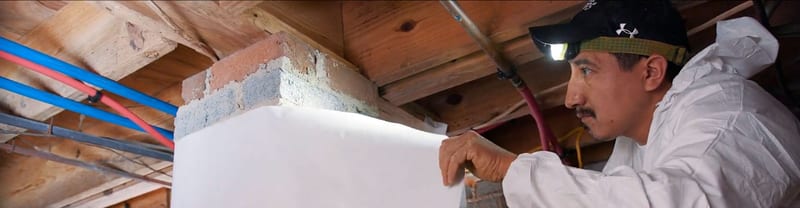
Spray foam insulation applied to the crawl space walls and rim joist does two things at once. It adds a thermal barrier between the conditioned space above and the ground below, and it seals the small gaps and cracks that let outside air bypass the vapor barrier entirely. In Charlotte’s climate, where the temperature difference between a summer afternoon and a below-grade crawl space is large enough to cause condensation, that air sealing matters as much as the insulation value itself.
Crawl Space Brothers installs closed-cell spray foam, which resists moisture absorption and won’t lose its R-value if the crawl space humidity spikes before a dehumidifier is running. We apply it after the encapsulation is complete so the insulation sits inside a controlled environment rather than being exposed to the conditions that damaged the old fiberglass.
A crawl space with moisture damage long enough will eventually show it in the structure. Floor joists soften and lose their load-bearing capacity, girders sag under weight they used to carry without issue, and support piers can shift or settle as the soil underneath them moves. By the time the floor above feels bouncy or visibly dips, the wood framing below has been compromised for a while.
Crawl Space Brothers installs adjustable steel jack support systems to stabilize and lift sagging floors back toward their original position. Where joists have rotted or cracked, we sister new lumber alongside the damaged wood to restore the original load path. We replace compromised girders and add supplemental piers where the existing supports have shifted, so the repair addresses the full structural picture rather than propping up one spot while the rest continues to move.
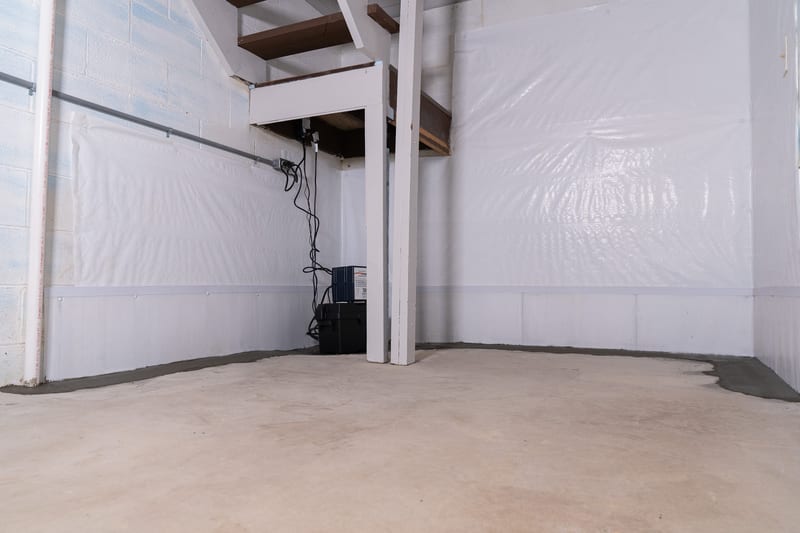
Charlotte homes with basements face the same Cecil clay and stormwater pressure that affects crawl spaces, but the water enters differently. It pushes through foundation cracks, seeps along the wall-to-floor joint, and can rise through the slab itself when the water table climbs after a heavy rain. A basement that stays dry most of the year but takes on water during wet stretches is showing a drainage problem that gets worse with each cycle.
Crawl Space Brothers installs interior drain tile systems that intercept water at the perimeter of the basement floor and route it to a sump pump before it can spread. For foundation cracks, we use epoxy and urethane injection methods that seal the crack from the inside out, filling the gap all the way through to the exterior soil. If your basement has both active water entry and foundation cracking, we address the structural repair first so the waterproofing system is anchored to a stable foundation.
Every repair we do comes with a lifetime transferable warranty, which means the coverage follows the house if you sell it. That matters for a crawl space fix because the conditions that caused the problem in the first place don’t go away when ownership changes, and the next owner shouldn’t have to wonder whether the work will hold.
We also offer a quality guarantee separate from the warranty. If at any point during or after the job you feel the work or the experience fell short, we address it directly rather than closing the file. Financing is available for repairs that need to happen now but don’t fit neatly into this month’s budget.
Your inspection is free, and it happens before any pricing conversation starts. We walk through what we find, explain what needs to be addressed and what can wait, and put the scope and cost in writing so there’s no ambiguity about what you’re paying for or why.
A crawl space problem that’s manageable today costs less to fix than one that’s had another year of Charlotte rain and humidity working on it. The inspection is free, takes about an hour, and gives you a clear picture of what’s happening under your home before you commit to anything.
Call us today for service to your home in Charlotte, North Carolina and the surrounding towns.
© 2025 CRAWL SPACE BROTHERS INC. All rights reserved.
*Terms and Conditions: Customer can only claim one offer per estimate. Financing options only available with approved credit. Offer may not be combined with any other offer. Ask foundation specialist for further details. Estimates dated April 4, 2026 through May 3, 2026 are not eligible. Promo valid through May 31, 2026. Installation appointments must be prior to June 20, 2026. Up to $1,500 offer equivalent to five-percent off any job over $10,000. Coupon must be presented at time of evaluation. Free dehumidifier offer also requires purchase and install of Crawl Space Encapsulation work of at least 1,000 square feet.